It takes a village
Updated On: 03 March, 2024 07:08 AM IST | Mumbai | Sumedha Raikar Mhatre
A new documentary revisits Maharashtra’s Mendha Lekha village, which continues to offer lessons in self-rule, participatory democracy and forest conservation





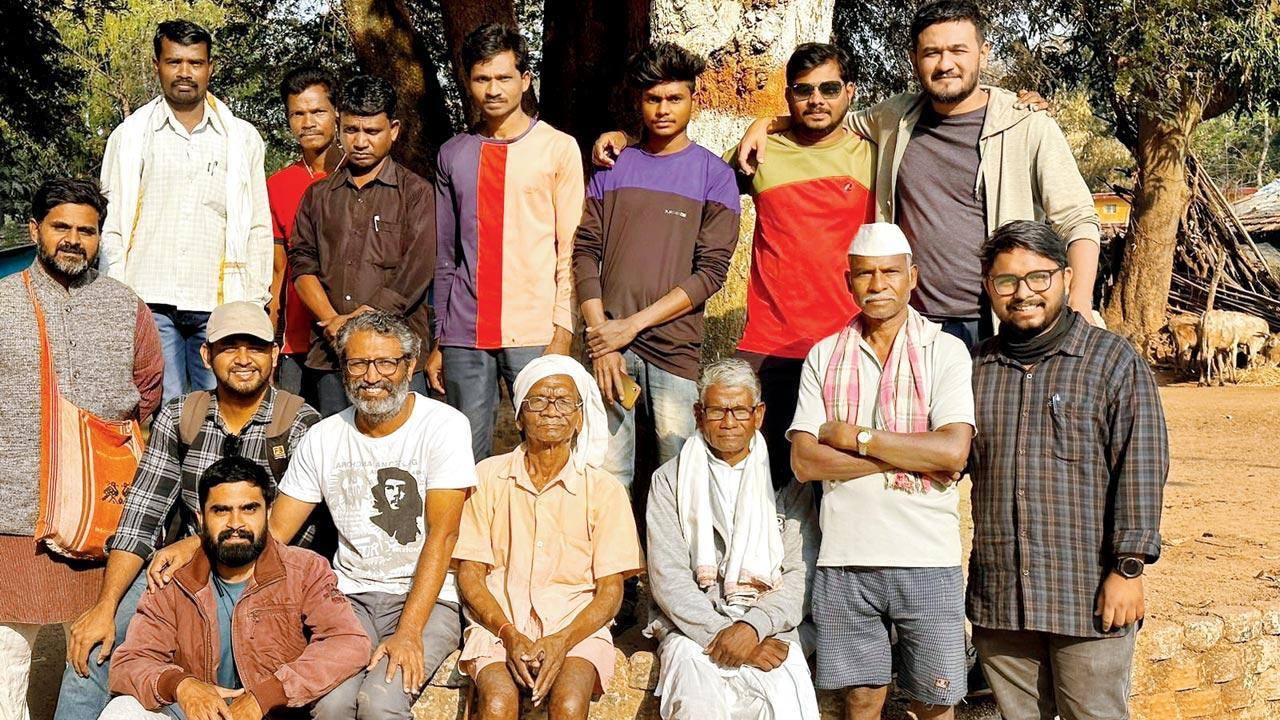
Valsangkar (first row, fourth from left), cinematographer Ninad Gosavi (last row, first from right) along with Aditya Kashid (second unit camera), Atharva Gaiki, Shubham Parwekar (assistant directors) with Devaji Tofa, Dukku kaka and Mendha Lekha’s residents
 During the 33rd minute of Disha Swarajyachi’s hour-long runtime, a powerful maxim on screen seizes the viewer. It isn’t applicable solely to the experimentative Mendha Lekha village—the protagonist of the documentary; it rings true of every public agitation of the day, more so when the powers that be are inclined to disregard the view of the “other”.
“Ladai karne ke liye, padhai karna padta hai; Bina padhai se ladai karenge toh haar bhi khayenge aur maar bhi khayenge (In order to wage a war, one must first study the situation; if we resist research and take up arms, we are bound to take a beating,” the maxim says. It is mouthed by Devaji Tofa, a Gond adivasi activist, as he looks back at Mendha Lekha’s Jungle Bachao, Manav Bachao journey since the 1980s. Tofa and the other celebrated agents of change in the village couldn’t have been more articulate about the importance of small, collective steps to bring in big-time reform.
Trending Stories
Latest Photos
Latest Videos
Latest Web Stories
ADVERTISEMENT
Mid-Day Fast
ADVERTISEMENT