Yale built on foundation of Indian textiles
Updated On: 03 March, 2024 07:11 AM IST | Mumbai | Shweta Shiware
An Indian-origin student’s research proposal proves how cloth handwoven by Indian weavers sealed the transformation of small Connecticut school into the invincibly solvent Yale University, and even earned its name





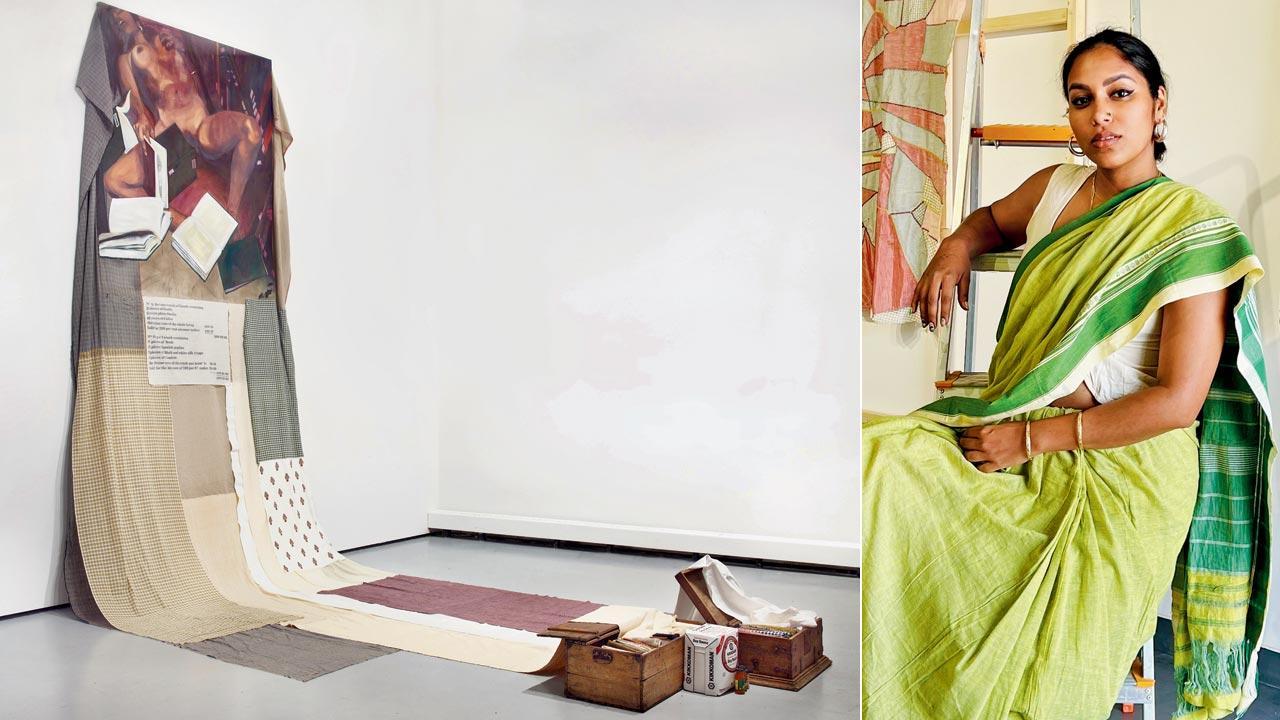
By crossing genres of weaving, sewing, dyeing and painting, Bhasha Chakrabarti’s Slavery, Race and Yale research proposal in December 2021 grounded her process of art-making in black feminism and queer theory; (right) Bhasha Chakrabarti
 Yale University, on February 16, issued a formal apology for its long and complex involvement in slavery, racism and abolition. This was accompanied by the release of Yale and Slavery: A History by Pulitzer-prize winning author David W Blight with the Yale and Slavery Research Project. The book begins with the early history of Connecticut, where in the 18th century roughly 50 per cent of the economy was connected to trade with the West Indies, which depended on slavery.
Yale students and faculty members began working on the Yale and Slavery Research project in October 2020, five months after the death of George Floyd, an African-American man killed by a white Minneapolis police officer.
Trending Stories
Latest Photos
Latest Videos
Latest Web Stories
ADVERTISEMENT
Mid-Day Fast
ADVERTISEMENT