Indian knowledge systems
Updated On: 11 February, 2024 04:45 AM IST | Mumbai | Devdutt Pattanaik
This lack of empathy indicates knowledge without wisdom that Sanatkumars are referring to. This Brahma-vidya is the lodestone of Indian Knowledge Systems.





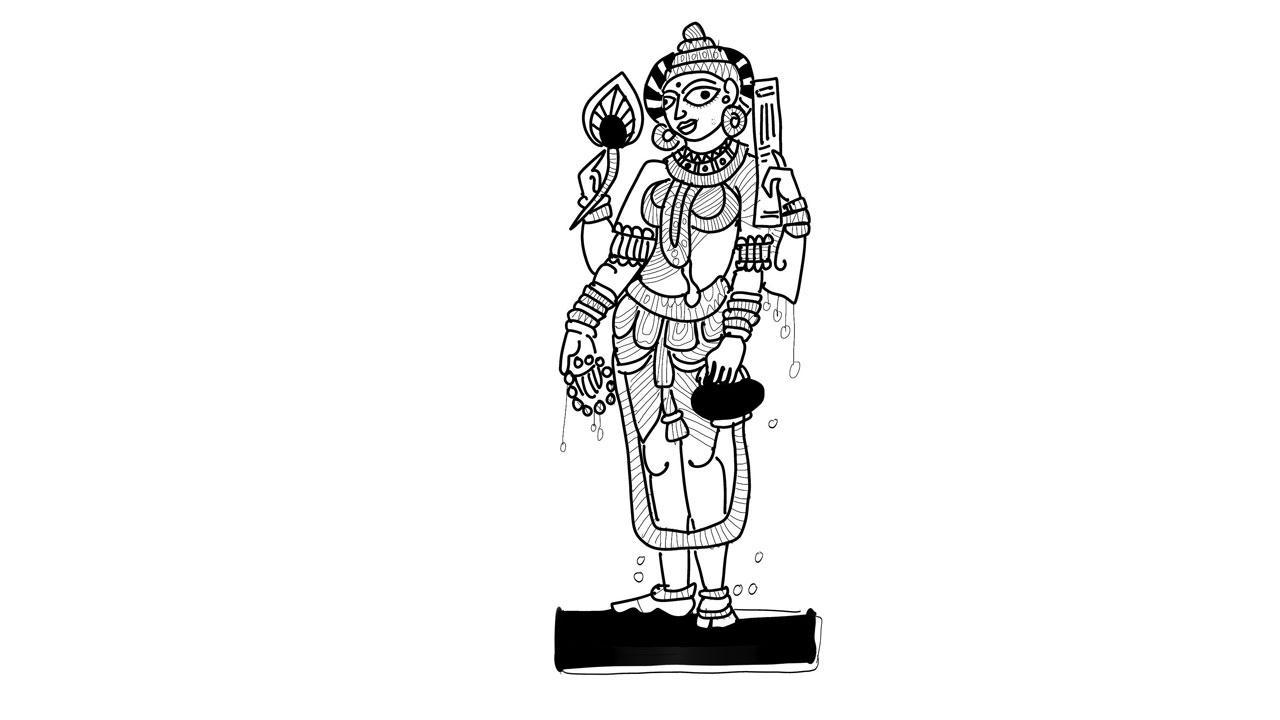
Illustration/Devdutt Pattanaik
 The first list of an educational syllabus in India comes from the Chandogya Upanishad, when the Sanatakumar sages ask Narada what subjects he is proficient in. Narada gives the following list: the four Vedas, the fifth Veda (itihasa-purana), the Vedanga (phoenetics, etymology, grammar, prosody, geometry, time-keeping, ceremonies), logic, earth science (physics, chemistry, biology) knowledge of gods (deva), ancestors (pitr), serpents (sarpa), stars (jyotisha). The Sanatkumar point out that the list does not include self-awareness (brahma-vidya) and so Narada’s knowledge is superficial, like memorisation, lacking understanding, and assimilation, preventing application.
Ravana, is a case in point. Ramayana describes him a Vedic Brahmin, author of many books related to medicine and astrology and engineering. But he does not respect humans. He strives to be dominating and territorial. He drives his brother out of the house and claims his property. He demands complete loyalty and submission from his brothers. He does not respect a woman’s consent. This lack of empathy indicates knowledge without wisdom that Sanatkumars are referring to. This Brahma-vidya is the lodestone of Indian Knowledge Systems.
Trending Stories
Latest Photos
Latest Videos
Latest Web Stories
ADVERTISEMENT
Mid-Day Fast
ADVERTISEMENT