Home / Sunday-mid-day / Article /
How Aarey’s Warli tribe, Cuffe Parade’s Gor Banjara community celebrate Diwali
Updated On: 12 November, 2023 08:16 AM IST | Mumbai | Neerja Deodhar
Aarey’s Warli padas and Cuffe Parade’s Gor Banjara settlement are alive with prep for a festival that signals, above all else, important harvests and a harmonious relationship with nature





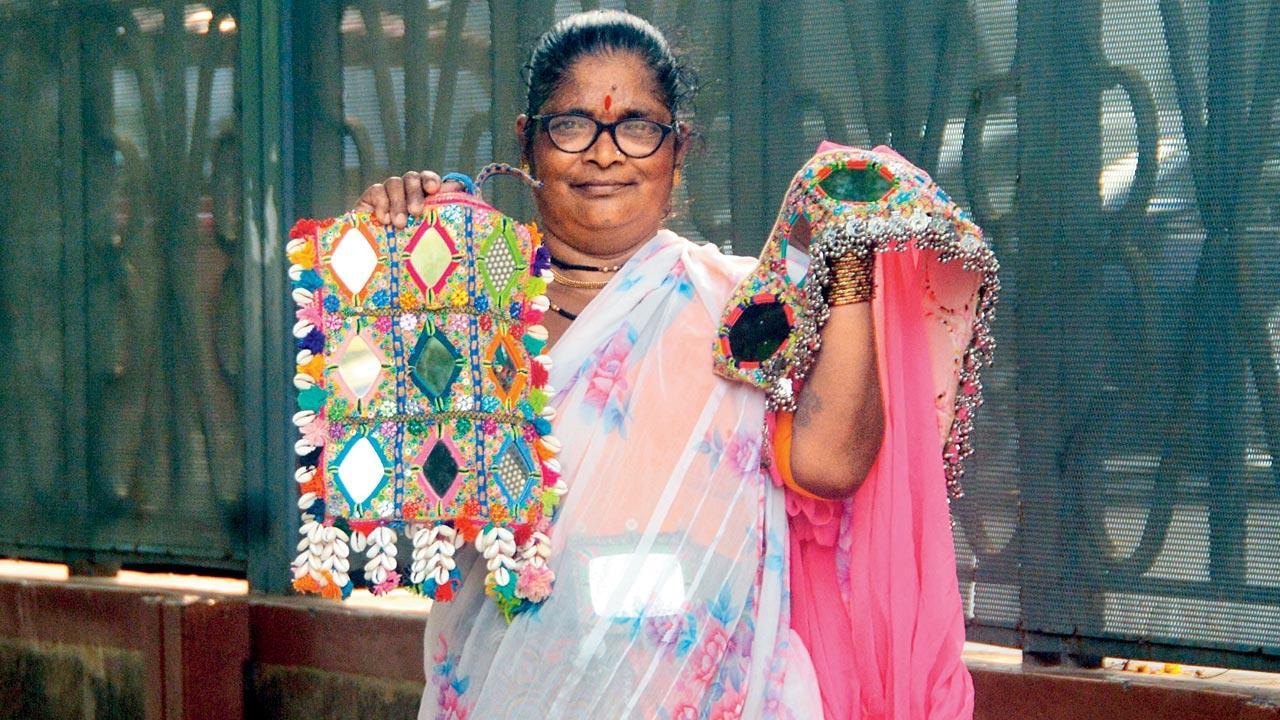
Jamalibai Chauhan shows the essential traditional dress worn by Banjara women on festive occasions, embellished with cowrie shells and mirrors. Pic/Satej Shinde
On a warm afternoon in Aarey Milk Colony’s Khambachapada, farmer Vanita Thakre recalls a childhood memory of carving a diya out of mud, alongside other miniature kitchen utensils or bhatukli. Her neighbour, Jaya Davde, sits beside her, as Jaya’s young son snacks on chakli. But neither diyas nor farsan will feature in the Diwali celebrations of this Warli community.
“This festival is the most significant for us, and we don’t consume any food that is not first blessed by our gods. Diwali is tied to the harvest of rice grains, ragi and vegetables such as chawli [cowpea beans]. It marks the start of the season when we begin eating produce like kand [air potato tubers], ridge gourd and pumpkin,” Thakre explains.
Trending Stories
Latest Photos
Latest Videos
Latest Web Stories
ADVERTISEMENT

Ganeshotsav 2026

ADVERTISEMENT