Home / Sunday-mid-day / Article /
This new handbook of Indian cuisine exploring railway food is a unique guide
Updated On: 24 September, 2023 10:42 AM IST | Mumbai | Team SMD
The Bloomsbury Handbook of Indian Cuisine is one of the most definitive and comprehensive guides to Indian cuisine. Here’s an excerpt





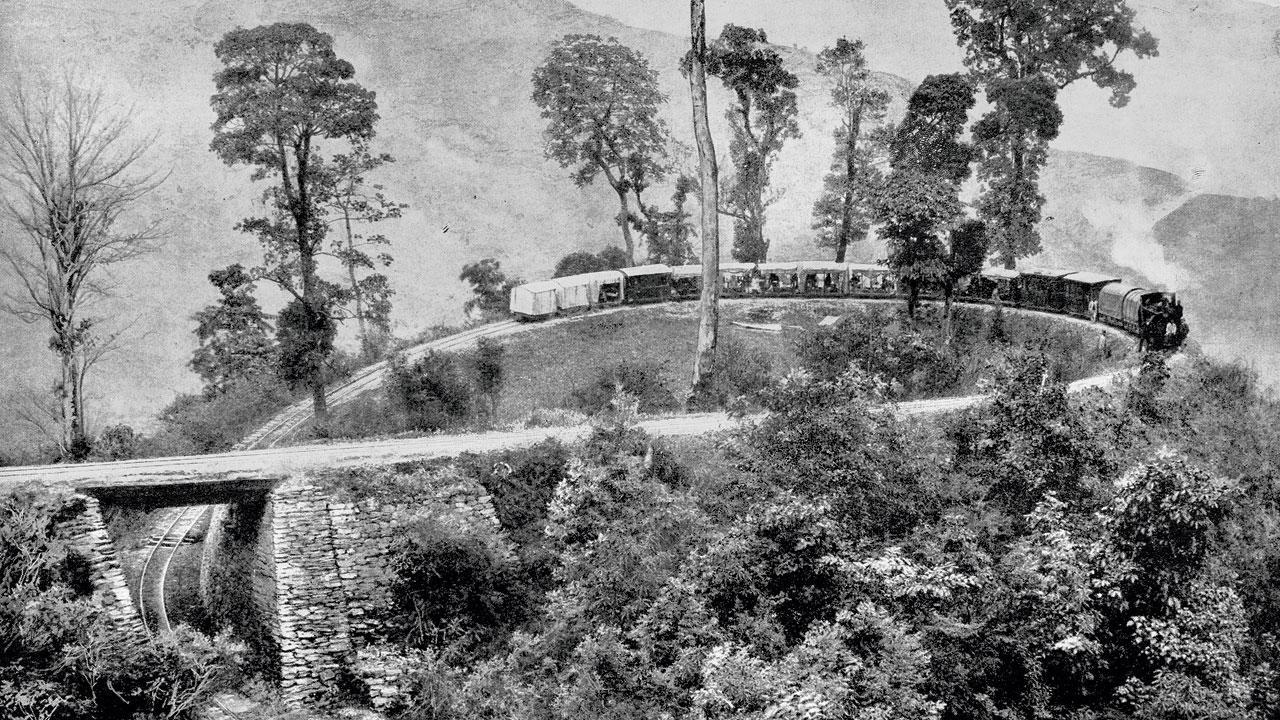
Antique photograph of the British Empire: The loop, Agony Point, Darjeeling Railway
At the beginning of the twentieth century, India had one of the largest railway networks in the world. The first freight train was built in Madras in 1837 and the first passenger train began a short run from Bombay to Thane in 1853. After India became a colony of the British crown in 1858, the development of railways became a priority for the British, for both economic and military reasons.
The first passenger trains were intended for the use of the British, although they quickly became popular among Indians too. In the early twentieth century, long-distance trains such as the Grand Trunk Express, the Frontier Mail and the Deccan Queen had luxurious dining cars with butlers, chefs, uniformed waiters and à la carte menus. The catering was undertaken by G.F. Kellner & Co. in the east and northwest (acquired by Spence & Co. in 1929); Spence & Co. Ltd. in the south; and Brandon in central India. The food combined European and Indian influences, especially Anglo-Indian, Bengali and South Indian. Western dishes might include thick or clear soup, fried fish or minced cutlets, roast chicken or mutton, and for lunch, a choice of curry and rice or the previous night’s roast. The trains carried live chickens while mutton was picked up at stations en route.
Trending Stories
Latest Photos
Latest Videos
Latest Web Stories
ADVERTISEMENT
Mid-Day Fast
ADVERTISEMENT