Seasonal march of festivals
Updated On: 03 March, 2024 05:02 AM IST | Mumbai | Devdutt Pattanaik
Both the Deccan festival of Ugadi and the Malayali festival of Vishnu happen around the spring equinox, marking the start of the monsoon winds that took traders across the sea, from Arabia through India to Southeast Asia





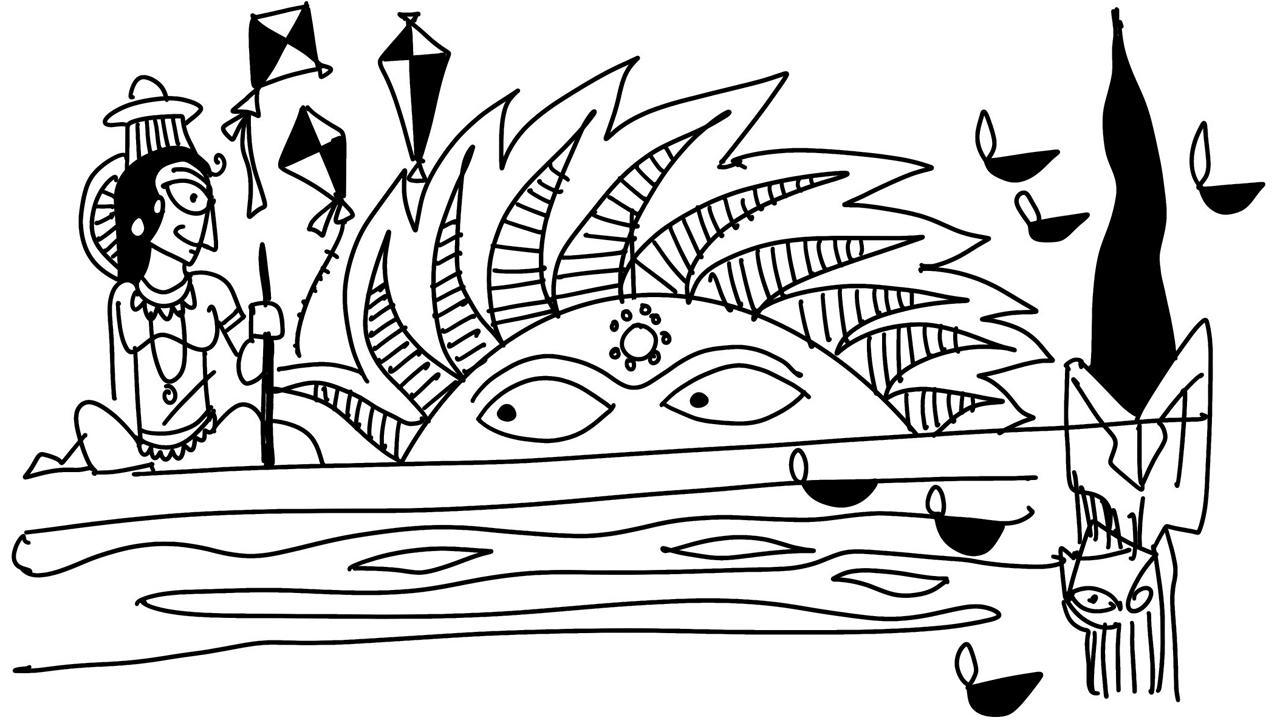
Illustration/Devdutt Pattanaik
 In most cultures, festivals follow the seasonal cycle, the exception to this rule is Islamic festivities. This is because the Islamic Hijri calendar is based on the moon and is 10 days short of the standard solar year of 365 days, and so, events are not mapped with the cycle of seasons. As a result, we find Ramadan appearing in different seasons in different years.
In Christianity, we notice a clear seasonal pattern of festivals. In March each year, there is both the Day of Annunciation, when Jesus Christ was conceived in the Virgin Mary, as well as the Easter Sunday celebration, when Jesus resurrects himself after three days following his crucifixion on Good Friday. Precisely nine months later, in the height of winter on December 25, Christmas is celebrated as the day of Jesus’s birth. Thus, we see conception and rebirth linked to spring and birth linked to the winter months.
Trending Stories
Latest Photos
Latest Videos
Latest Web Stories
ADVERTISEMENT
Mid-Day Fast
ADVERTISEMENT