Otzi and the sublimity of time
Updated On: 06 January, 2023 05:51 AM IST | Mumbai | Rosalyn D`mello
Confronting such an aged body like that of the iceman made me think about geological time, a humbling idea when one is ringing in a new year, because it subverts our experience of chronology as linear





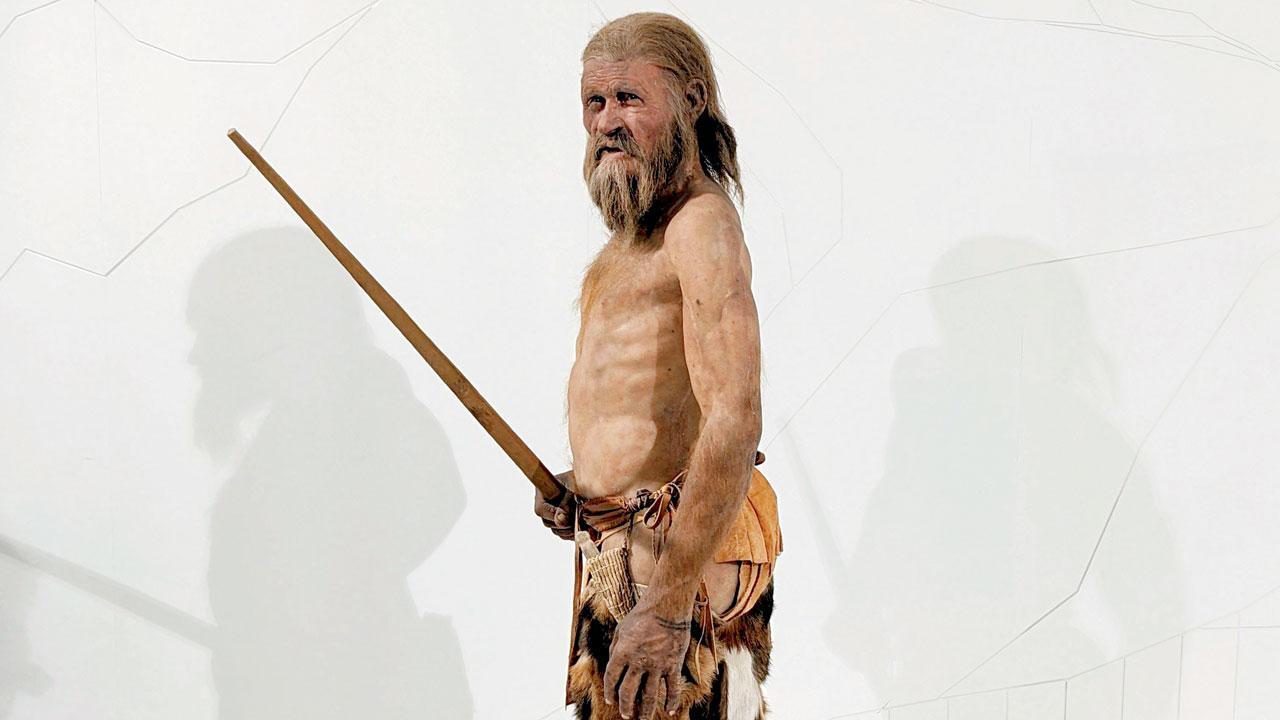
A 3D reconstruction of Otzi, the ice mummy, at the South Tyrol Museum of Archaeology, Bozen. Pic/Rosalyn D’Mello
 Last week I finally had an audience with the ice mummy, Otzi. If you’ve spent even a day in South Tyrol’s capital, Bozen, you will have been subjected to 3D reconstructed portraits of the chalcolithic iceman. The South Tyrol Museum of Archaeology, where his remains are housed, usually has a serpentine queue of tourists lured by the ubiquitous marketing. Since early December, when we visited the Egyptian Museum in Turin, I had been thinking about museological necropolitics, a term I felt sure I was constructing to encapsulate how the differential display of human remains in western museums attests to legacies of colonialism. European-led excavations in non-European territories frequently yielded preciously embalmed and buried bodies that were then displaced from their intended sites of rest and repurposed into objects of study and display to cater to the consumptive appetites of white folk. Such museological practices were justified in the name of science, just as colonisation was validated by religious evangelism. I discovered, while writing this column, that the philosopher Achille Mbembe describes necropolitics as ‘the capacity to define who matters and who does not, who is disposable and who is not’, which seems connected to the queer theorist Judith Butler’s ponderings on what constitutes a grievable life.
Also Read: 2023 reasons to hope again
Trending Stories
Latest Photos
Latest Videos
Latest Web Stories
ADVERTISEMENT
Mid-Day Fast
ADVERTISEMENT