Home / News / India News / Photos / IN PHOTOS: Indian Red Scorpion spotted in Maharashtra`s Nashik district

IN PHOTOS: Indian Red Scorpion spotted in Maharashtra`s Nashik district

Updated On: 30 January, 2026 11:57 AM IST | Tarun Verma

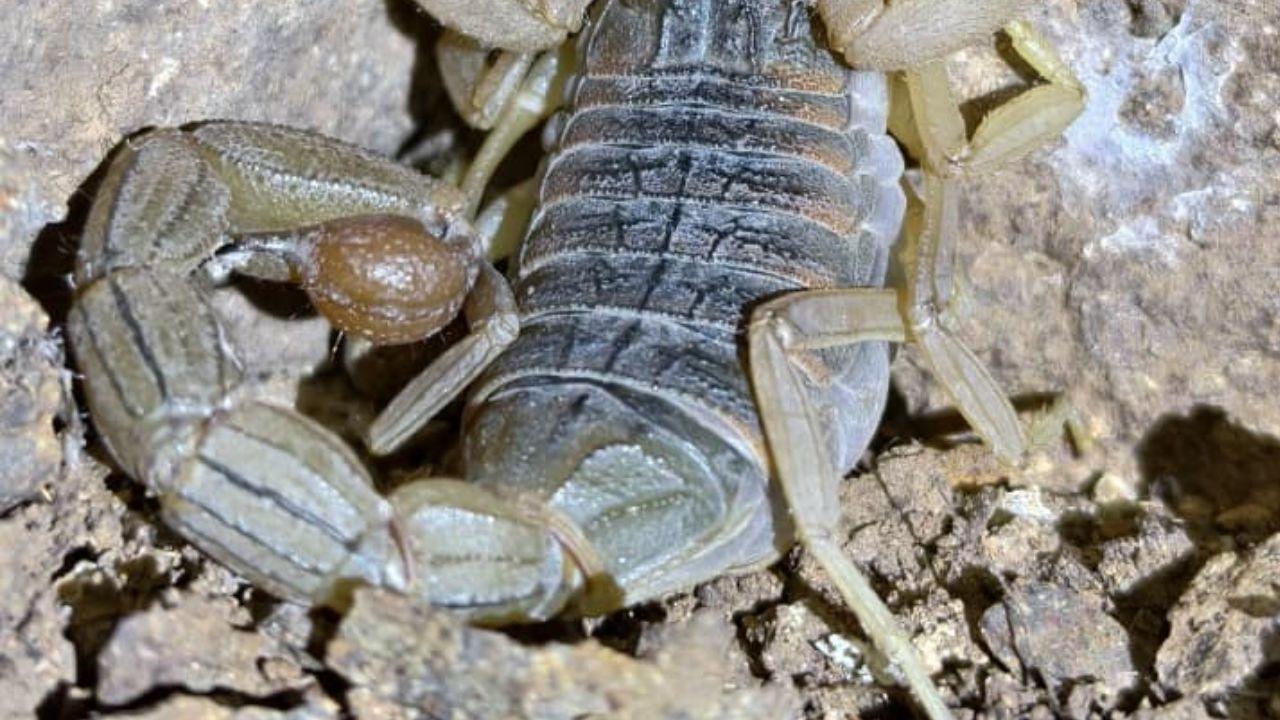
The Indian red scorpion (Hottentotta tamulus), one of India’s most venomous species, was spotted glowing blue-green under ultraviolet light in Nashik district. Captured by scientist Rajesh Sanap, the sighting highlights the scorpion’s natural fluorescence caused by compounds in its exoskeleton. (Pics/Rajesh Sanap)


The Indian red scorpion (Hottentotta tamulus), one of India’s most venomous species, was spotted glowing blue-green under ultraviolet light in Nashik district. Captured by scientist Rajesh Sanap, the sighting highlights the scorpion’s natural fluorescence caused by compounds in its exoskeleton. (Pics/Rajesh Sanap)

1/6

The Indian red scorpion (Hottentotta tamulus), one of India’s most venomous species, was spotted glowing blue-green under ultraviolet light in Nashik district. Captured by scientist Rajesh Sanap, the sighting highlights the scorpion’s natural fluorescence caused by compounds in its exoskeleton. (Pics/Rajesh Sanap)
<p>The scorpion was sighted outside the protected area in on the descending slope of a small hillock at Nashik</p>

2/6

The scorpion was sighted outside the protected area in on the descending slope of a small hillock at Nashik

<p>Pictures of the Indian red scorpion were captured by Rajesh Sanap, a scientist at the Thackeray Wildlife Foundation, revealing how the scorpion&rsquo;s otherwise ordinary brownish appearance transforms into a luminous spectacle when exposed to UV rays</p>

3/6

Pictures of the Indian red scorpion were captured by Rajesh Sanap, a scientist at the Thackeray Wildlife Foundation, revealing how the scorpion’s otherwise ordinary brownish appearance transforms into a luminous spectacle when exposed to UV rays

<p>Certain compounds present in the scorpion&rsquo;s exoskeleton (outer body layer) react to ultraviolet light, producing fluorescence, making it a biological reaction</p>

4/6

Certain compounds present in the scorpion’s exoskeleton (outer body layer) react to ultraviolet light, producing fluorescence, making it a biological reaction

<p>Wildlife expert Rajesh Sanap also noted that while scorpion sightings are fairly common, they are difficult to detect with the naked eye and are more easily observed using a UV torch</p>

5/6

Wildlife expert Rajesh Sanap also noted that while scorpion sightings are fairly common, they are difficult to detect with the naked eye and are more easily observed using a UV torch

<p>The Indian red scorpion is one of the most venomous scorpion species in India, and this particular creature was spotted on Wednesday in the Nashik district</p>

6/6

The Indian red scorpion is one of the most venomous scorpion species in India, and this particular creature was spotted on Wednesday in the Nashik district

Photo of Day

Breaking barriers and building pyramids — Women power in action!

Breaking barriers and building pyramids — Women power in action!

Sashastra Seema Bal’s (SSB) Daredevils team performs during rehearsals for the Republic Day Parade, in New Delhi. PIC/PTI

Advertisement