





Home / Mumbai / Mumbai News / Article /
Mumbai sees improved air quality post-monsoon onset, some parts still suffer
Updated On: 10 June, 2025 09:30 AM IST | Mumbai | Eeshanpriya MS
While Mumbai air quality has shown an overall improvement since the onset of the monsoon on May 25 this year, even the rain which is expected to clean pollution from the air has not been able to improve air quality in high-footfall areas such as Bandra Kurla Complex (BKC), Kandivli, Malad, Chembur, Sion, and Kurla

Listen to this article :
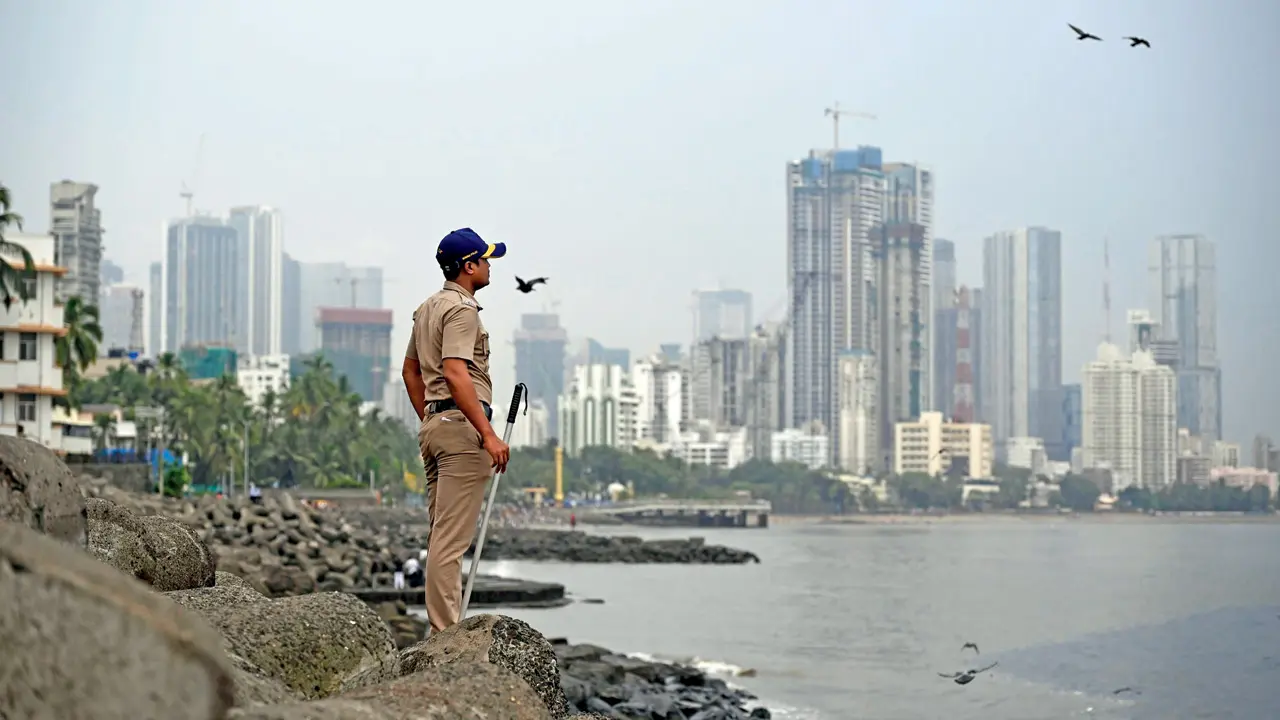
A haze at Mahim beach on June 7. Pic/Ashish Raje
While Mumbai’s air quality has shown an overall improvement since the onset of the monsoon on May 25 this year, even the rain which is expected to clean pollution from the air has not been able to improve air quality in high-footfall areas such as Bandra Kurla Complex (BKC), Kandivli, Malad, Chembur, Sion, and Kurla, especially during peak hours of traffic and activity.
In the past fortnight since the onset of monsoon, Mumbai has recorded ‘good’ and ‘satisfactory’ Air Quality Index (AQI) in several areas such as Worli, Byculla, Colaba, Ghatkopar, Bhandup, and Mulund according to Central Pollution Control Board’s (CPCB) station wise data.
However, during the same time during peak activity hours such as between 6 pm and 10 pm, BKC has recorded sustained pollution with the AQI extending to the ‘moderate’ category on six days, Kandivli has recorded 13 days of AQI extending to the ‘moderate’, and Vile Parle has recorded one day in the ‘poor’ category, with AQI crossing the 200 mark. Sion, Kurla, and Shivaji Nagar have recorded AQI in the ‘moderate’ category on two days each.
Trending Stories
Latest Photos
Latest Videos
Latest Web Stories
ADVERTISEMENT
Mid-Day Fast
ADVERTISEMENT

ADVERTISEMENT