





Home / Mumbai / Mumbai News / Article /
Mumbai: Bandra Kurla Complex chokes as pollution levels soar
Updated On: 16 November, 2024 01:34 PM IST | Mumbai | Dipti Singh
Experts blame traffic, construction dust, and nearby polluted rivers for BKC’s worsening air quality

Listen to this article :
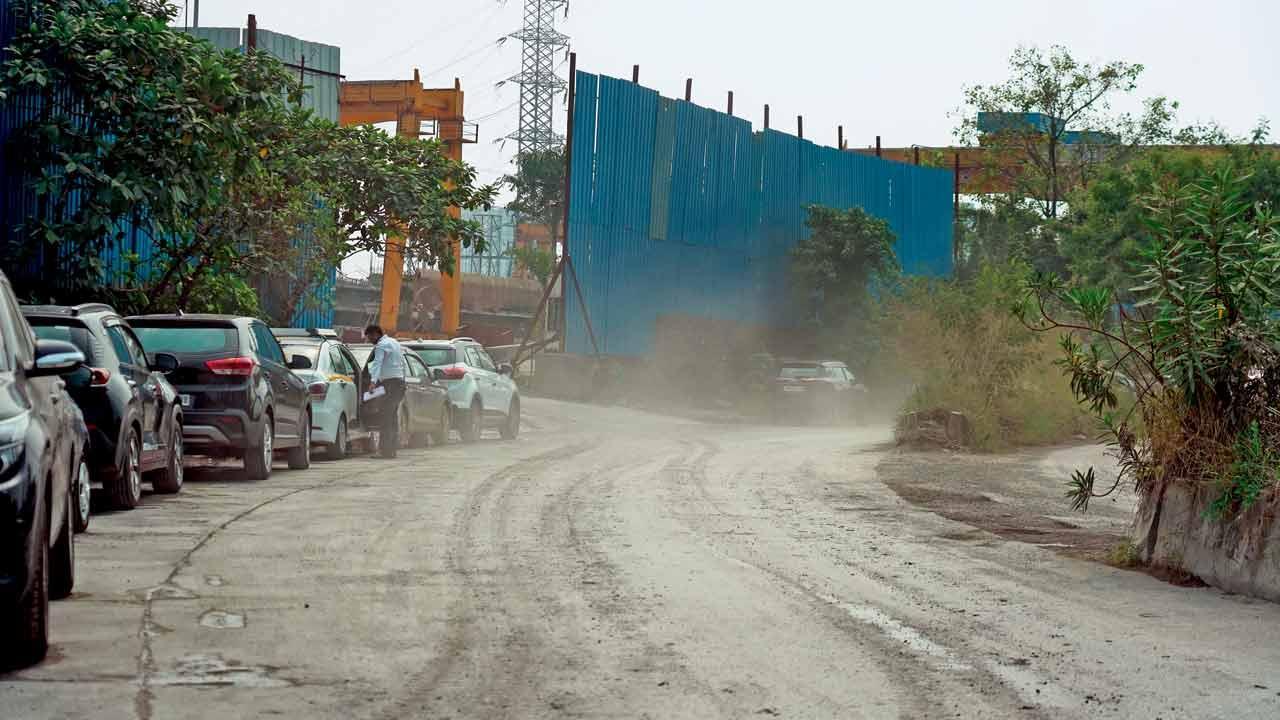
Dusty roads leading to pollution in BKC near the ONGC building in October. File pic
 The Bandra Kurla Complex (BKC), one of Mumbai’s key commercial hubs, is becoming a major pollution hotspot, with air quality sometimes worse than Delhi’s notorious hotspots. Every year as winter and Diwali approaches, pollution surges in the city, raising health concerns. According to the Brihanmumbai Municipal Corporation’s 2022-2023 Environmental Status Report, BKC’s Bandra Kurla Junction consistently records the city’s highest pollution levels, with PM10 concentrations at 121 micrograms per cubic meter—twice the safe limit set by the Central Pollution Control Board (CPCB). Dust from ongoing construction is cited as the primary cause by the officials.
The CPCB’s SAMEER app provides real-time AQI data, but health advocates are pushing for more aggressive action as pollution levels remain high. Reports from SAFAR categorise BKC’s AQI as “very poor,” with PM2.5 readings that worsen respiratory conditions like asthma. Data from Respirer Living Sciences shows that BKC’s October 2024 PM2.5 average was 47.69 µg/m³, making it Mumbai’s fourth most polluted area. Other highly polluted zones include Shivaji Nagar-Govandi, Sewri, and Deonar. According to Indian standards, PM2.5 levels should stay below 40 µg/m³ annually but sustained high levels pose health risks, especially to seniors and those with respiratory issues.
Trending Stories
Latest Photos
Latest Videos
Latest Web Stories
ADVERTISEMENT
Mid-Day Fast
ADVERTISEMENT

ADVERTISEMENT