





Home / Mumbai / Mumbai News / Article /
The future of Shiv Sena post-split: Which faction holds the power?
Updated On: 31 October, 2024 12:40 PM IST | Mumbai | Ronak Mastakar
Shiv Sena finds itself divided into two factions: the Uddhav Thackeray-led Sena (UBT) and the Shinde-led Shiv Sena faction, which broke away to form an alliance with BJP. As both sides prepare for a political showdown in the assembly elections, experts and party insiders weigh in on which faction may hold the upper hand

Listen to this article :
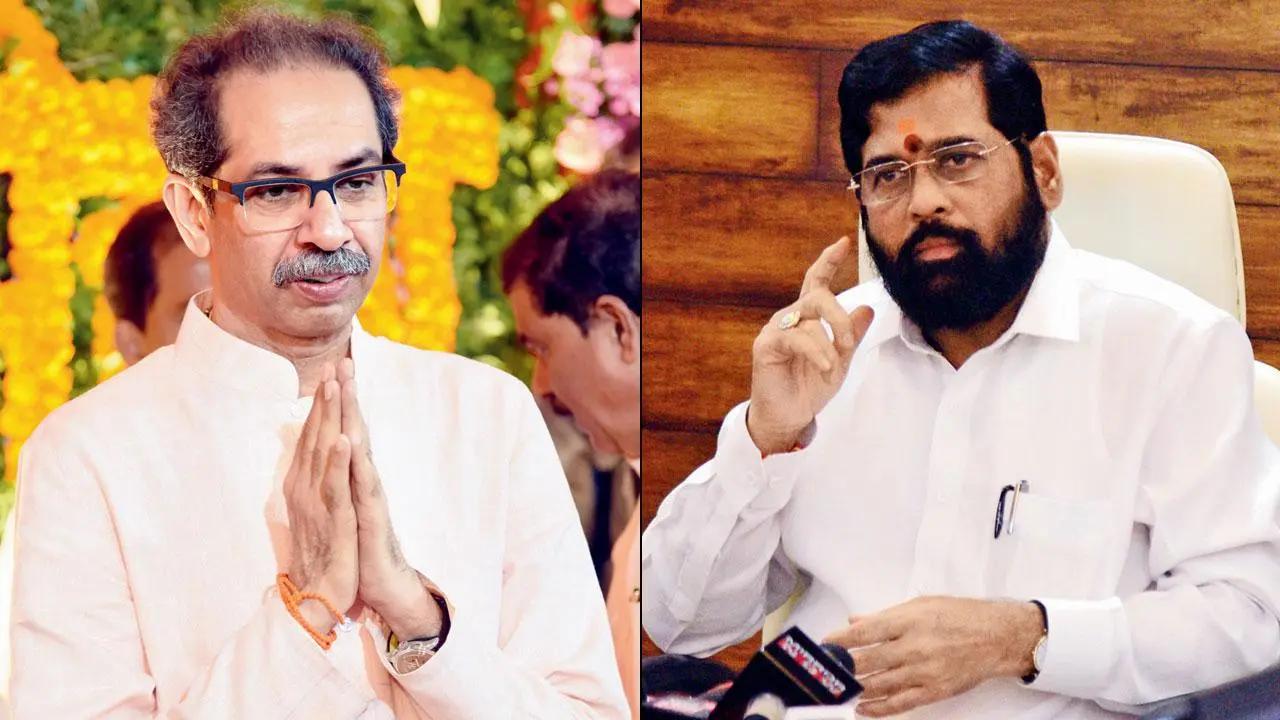
Uddhav Thackeray and Eknath Shinde. File pics
As the state gears up for the Maharashtra assembly elections 2024, one of the biggest questions hanging in the air is the future of the Shiv Sena, a party that has long been a key player in the state’s political arena. The Shiv Sena has seen significant changes since its formation in 1966, but the internal rift that surfaced in 2022 led to a historic split, reshaping the political landscape. Now, the Shiv Sena finds itself divided into two factions: the Uddhav Thackeray-led Sena (UBT) and the Shinde-led Shiv Sena faction, which broke away to form an alliance with the Bharatiya Janata Party (BJP). As both sides prepare for a political showdown in the assembly elections, experts and party insiders weigh in on which faction may hold the upper hand.
Background: The Shiv Sena split and its aftermath
The seeds of the Shiv Sena split were sown during the party’s tenure in the Maharashtra Vikas Aghadi (MVA) alliance with the Congress and the Nationalist Congress Party (NCP), a partnership that left traditional Sena loyalists uneasy. Many within the party argued that the partnership diverted Shiv Sena from its foundational Hindutva ideology. In 2022, Eknath Shinde led a faction of Shiv Sena legislators to align with the BJP, taking with him a substantial share of the party’s support base. The result was a bifurcation that left the Uddhav Thackeray-led faction with a weakened political base but resilient brand loyalty.
Buy now to read the full story.
For any queries please contact us: E-mail: support@mid-day.com
Trending Stories
Latest Photos
Latest Videos
Latest Web Stories
ADVERTISEMENT
Mid-Day Fast
ADVERTISEMENT

ADVERTISEMENT