





Home / Mumbai-guide / Things To Do / Article /
A canvas for Shaheen Bagh’s women
Updated On: 29 May, 2021 11:43 AM IST | Mumbai | Sukanya Datta
A graphic narrative unveils how the sit-in protest — initiated by women of the Delhi neighbourhood against CAA-NRC — gave birth to a larger movement

Listen to this article :
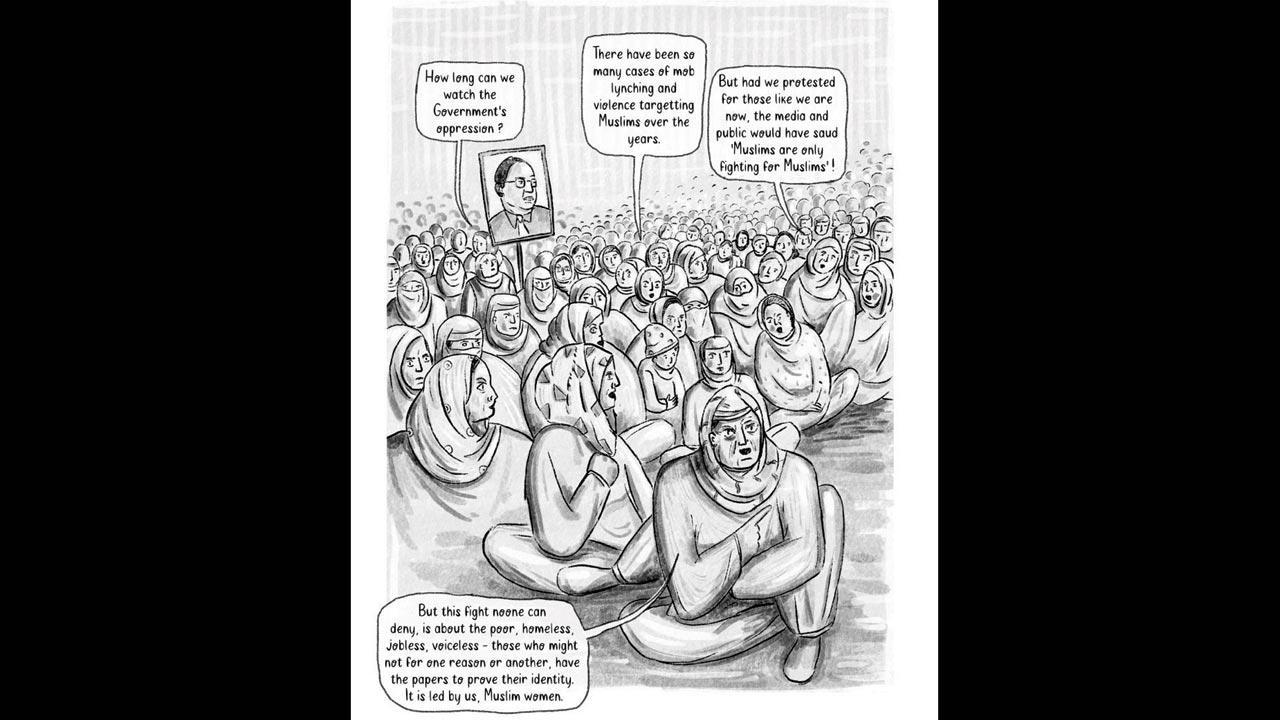
Panels from the book. Pics/Ita Mehrotra, Yoda Press
In December 2019, when the rest of Delhi was busy warming up for the biting-cold winter ahead, small groups of Muslim women residing in Shaheen Bagh started banding together during the foggy nights. Often accompanied by their kids and husbands, they’d sit near the highway, chanting slogans, singing songs, and discussing the way ahead for their ilk, which faced the threat of being wiped out by the National Register of Citizens (NRC) and Citizenship (Amendment) Act (CAA) that were being imposed by the Centre. The freezing winter, the ruthless criticism, a heartless administration, the gunned threats and even a burning riot — nothing deterred them. How could it? Their children had been attacked, and their very identity was at stake.
What started out as a sit-in to mark dissent against the government, snowballed into a people’s movement over the next three months, its ripples felt across the country, including at our very own Mumbai Bagh. Visual artist and researcher Ita Mehrotra, who watched it all unfold in front of her eyes, has documented this awe-inspiring journey in her upcoming title, Shaheen Bagh - A Graphic Recollection (Yoda Press). The Delhi-based artist, who has in the past sketched the battles of the Chipko movement leaders and Irom Sharmila, shares, “I see the role of an artist as being essentially political, in taking stands against an increasingly oppressive state, and expressing those creatively.”
Read Next Story
Trending Stories
Latest Photos
Latest Videos
Latest Web Stories
ADVERTISEMENT
Mid-Day Fast
ADVERTISEMENT

ADVERTISEMENT