Home / Entertainment / Web Series / Photos /
Revisiting Indian textile influence in Netflix series Bridgerton
Updated On: 05 February, 2026 07:14 PM IST | Athulya Nambiar
The fourth season of Bridgerton dropped on Netflix recently. For Indians, however, the season 2 remains one of the most memorable seasons with the introduction of Kate and Edwina Sharma. The season also gave a hat tip to Indian textile legacy



1/11
.jpg "<p>Bridgerton Season 2 introduced Kate Sharma and Edwina Sharma, portrayed by Simone Ashley and Charithra Chandran, marking the show’s most prominent South Asian representation</p>")
2/11
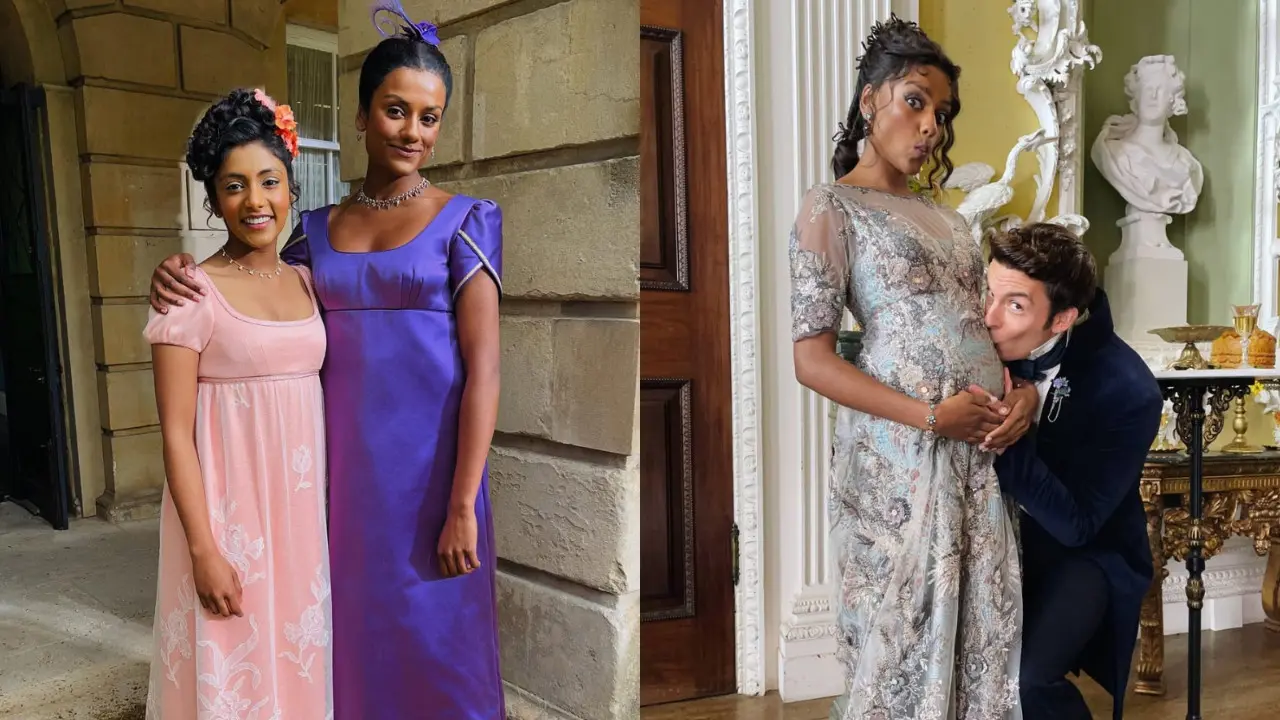
Bridgerton Season 2 introduced Kate Sharma and Edwina Sharma, portrayed by Simone Ashley and Charithra Chandran, marking the show’s most prominent South Asian representation
ADVERTISEMENT
.jpg "<p>The Sharma sisters are depicted as being of Indian origin, with their backstory rooted in Bombay (now Mumbai), subtly weaving Indian heritage into Regency-era England</p>")
3/11
The Sharma sisters are depicted as being of Indian origin, with their backstory rooted in Bombay (now Mumbai), subtly weaving Indian heritage into Regency-era England
.jpg "<p>Kate is written as strong, independent, and protective—traits that echo the archetype of a responsible elder sibling often seen in Indian family dynamics</p>")
4/11
Kate is written as strong, independent, and protective—traits that echo the archetype of a responsible elder sibling often seen in Indian family dynamics
ADVERTISEMENT
.jpg "<p>Edwina’s portrayal as the season’s “diamond” aligns with traditional expectations of grace, obedience, and matrimonial desirability, resonating with cultural ideas of marriageability</p>")
5/11
Edwina’s portrayal as the season’s “diamond” aligns with traditional expectations of grace, obedience, and matrimonial desirability, resonating with cultural ideas of marriageability
.jpg "<p>Costume designer Sophie Canale infused Indian aesthetics into the Sharma sisters’ wardrobes through jewel tones, embroidery-inspired textures, and regal silhouettes</p>")
6/11
Costume designer Sophie Canale infused Indian aesthetics into the Sharma sisters’ wardrobes through jewel tones, embroidery-inspired textures, and regal silhouettes
ADVERTISEMENT
.jpg "<p>Kate’s costumes feature structured silhouettes, high-necklines, and bold colours like deep purples and teals, symbolising authority, restraint, and inner strength</p>")
7/11
Kate’s costumes feature structured silhouettes, high-necklines, and bold colours like deep purples and teals, symbolising authority, restraint, and inner strength
.jpg "<p>Edwina’s outfits lean towards pastels, florals, and lighter fabrics, visually reinforcing her innocence, romanticism, and traditional femininity</p>")
8/11
Edwina’s outfits lean towards pastels, florals, and lighter fabrics, visually reinforcing her innocence, romanticism, and traditional femininity
ADVERTISEMENT
.jpg "<p>The sisters’ jewellery—especially Kate’s—includes pieces inspired by Indian heirloom styles, such as chokers, gemstones, and ornate hair accessories</p>")
9/11
The sisters’ jewellery—especially Kate’s—includes pieces inspired by Indian heirloom styles, such as chokers, gemstones, and ornate hair accessories
.jpg "<p>Kate’s sleek buns and structured hairstyles subtly reference Indian updos, while Edwina’s softer curls reflect her gentler persona</p>")
10/11
Kate’s sleek buns and structured hairstyles subtly reference Indian updos, while Edwina’s softer curls reflect her gentler persona
ADVERTISEMENT
.jpg "<p>Season 2 was widely praised for normalising Indian representation in a global mainstream series without exoticising it, making the Sharmas central to the narrative rather than cultural tokens</p>")
11/11
Season 2 was widely praised for normalising Indian representation in a global mainstream series without exoticising it, making the Sharmas central to the narrative rather than cultural tokens
ADVERTISEMENT
Photo of Day
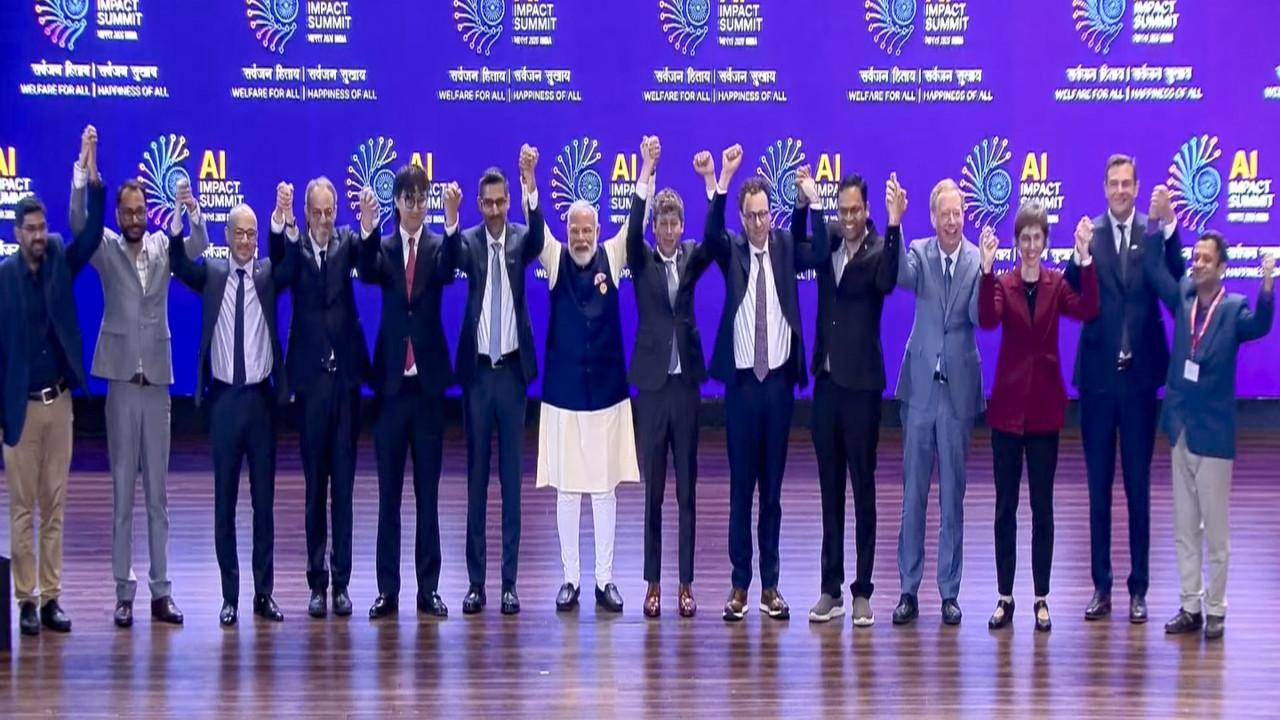
Global AI leaders join PM Modi in a bid to push for a smarter, inclusive future
PM Narendra Modi joins hands with Google CEO Sundar Pichai, OpenAI CEO Sam Altman, and others during the India AI Impact Summit 2026, in New Delhi. PIC/PTI
ADVERTISEMENT