





Home / Entertainment / Bollywood News / Article /
Varijashree Venugopal on Grammy nod: 'Could name ragas before I began to speak'
Updated On: 11 November, 2024 07:49 AM IST | Mumbai | Sonia Lulla
Having bagged a nomination at the upcoming 67th Grammy Awards, Indian musician Varijashree Venugopal on the principles she adhered to to become worthy of the Best Global Music Performance title

Listen to this article :
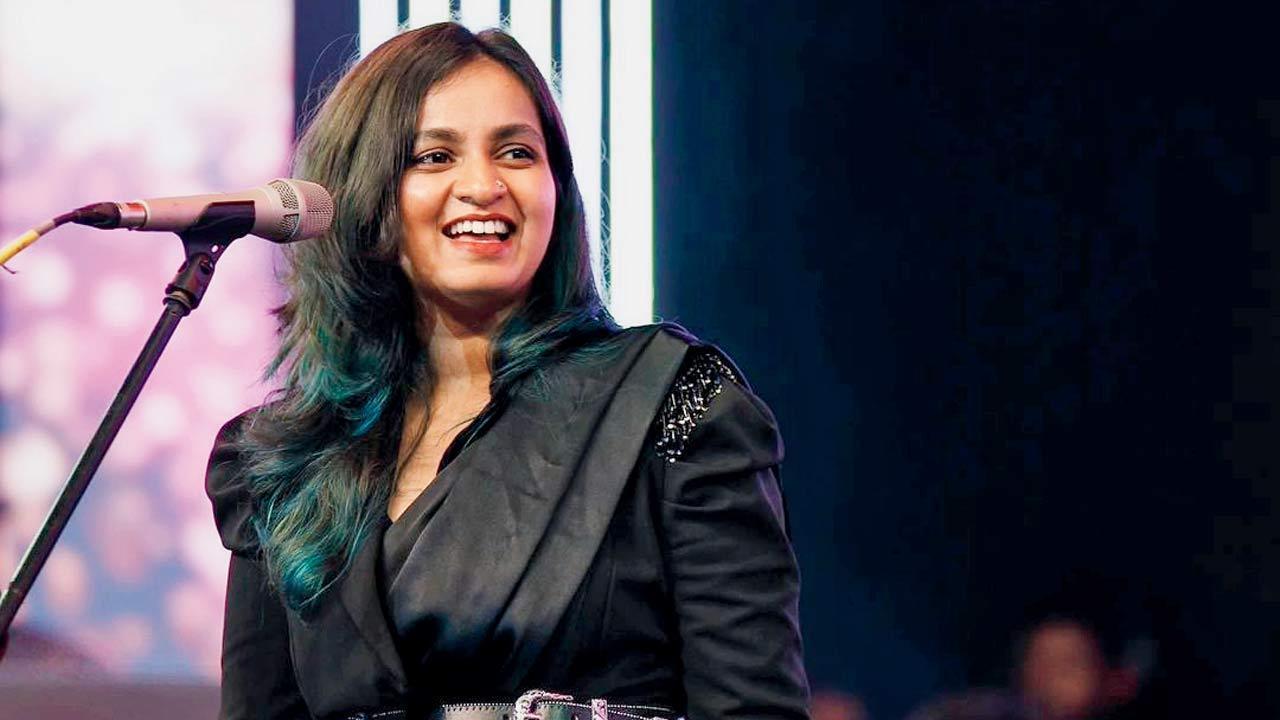
Varijashree Venugopal. PIcs/Instagram
Varijashree Venugopal is often described as the artiste who had the rare ability to identify 40 ragas when she was merely 18 months old. Hailing from a musical family, she recalls being told by her relatives that if she went missing at family gatherings, “it was understood” that she’d be found at the dais, listening to the performing musicians. “In my family, music was appreciated. My father was a banker who also taught music before taking voluntary retirement to pursue it full-time. All the exposure that I had as a kid helped me become the artiste I am. I am told that before I began to speak, I could name ragas. So, my parents realised that I was retaining this information, and gave me the right [education] at the right time. I was blessed to be given the opportunity and the tools [to flourish],” says Venugopal, who, after having spent 30 years pursuing music, has earned a Grammy nomination at the upcoming 2025 gala for having rendered Jacob Collier’s A rock somewhere, along with Anoushka Shankar.
It was owing to a chance occurrence that the track, which has been nominated for the Best Global Music Performance, came her way. Having been ‘Instagram friends’ with Collier, Venugopal describes the English producer, 30, as one of the “most brilliant, wild, and talented geniuses” she has come across. “I was extremely fascinated by the uniquely different things he does with his music. We had been in touch on Instagram, and, one day, he asked if I would sing this song that is part of his album, because he imagined my voice, and believed I would be perfect for it. Of course, I was extremely happy to record the song, and did so remotely in Bengaluru. If you listen to the entire album, this song stands out owing to its sonic platter. [Multiple sounds] come together; it involves Indian [instruments] like the sitar, which has been showcased in a modern [avatar]. The rest of the songs have different flavours. Perhaps that is why this one stands out—due to the uniqueness of the treatment given to the music.”
Trending Stories
Latest Photos
Latest Videos
Latest Web Stories
ADVERTISEMENT
Mid-Day Fast
ADVERTISEMENT

ADVERTISEMENT